
Laughing Gas for Kids at the Dentist: A Parent’s Visit Guide
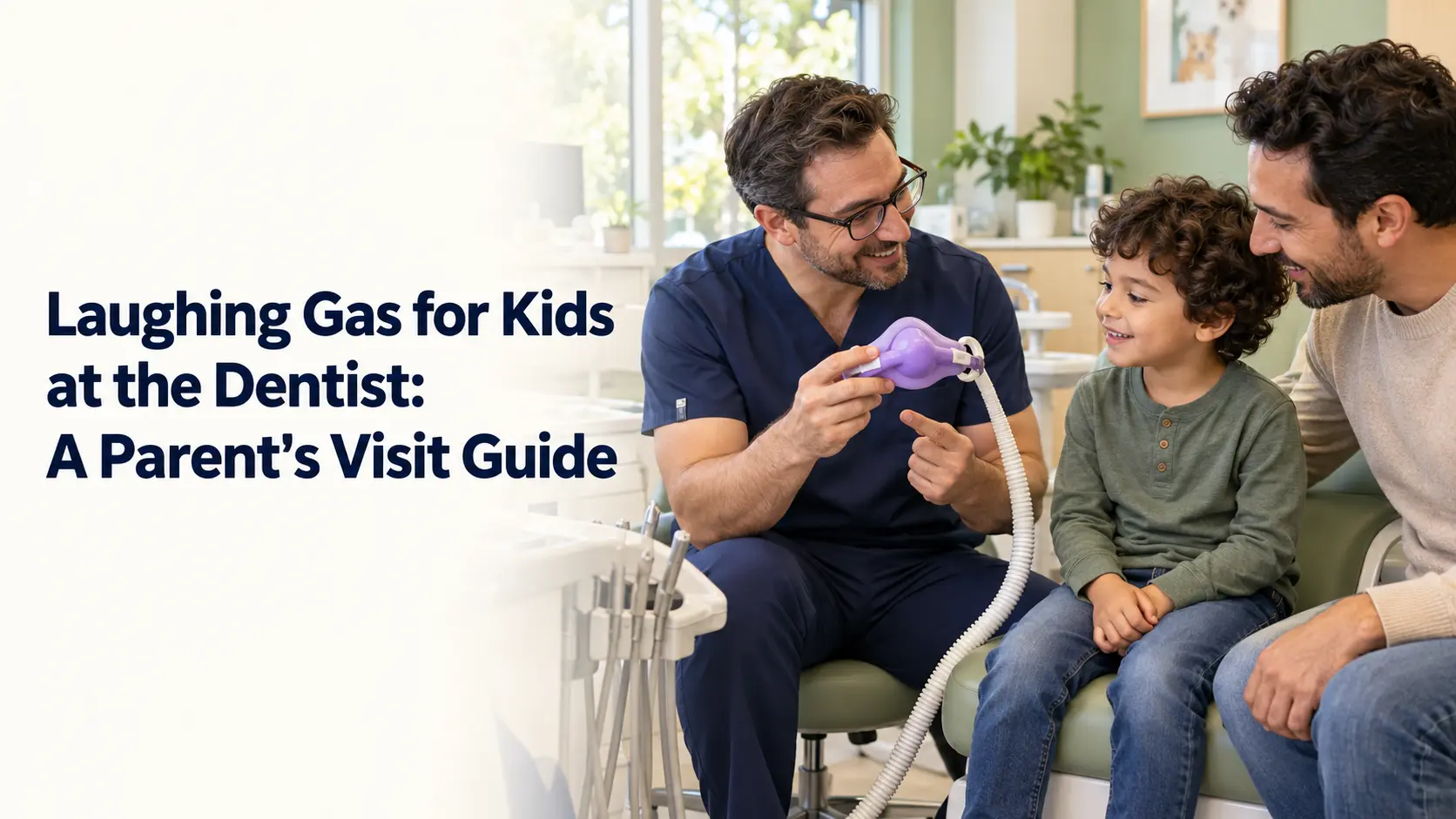
When a dentist recommends laughing gas, parents often ask the same questions: Is it safe, will my child stay awake, and what will the visit feel like? Laughing gas for kids at the dentist is used to reduce fear while helping children remain responsive.
You may also hear the phrase nitrous oxide pediatric dentistry. It means using a carefully controlled gas mixed with oxygen to help a child relax. Here is what to expect.
What Is Laughing Gas for Kids?
Laughing gas is breathed through a small mask placed over the nose. It begins working within minutes, and the child usually stays awake, hears the dental team, and answers questions.
The name can be misleading. Not every child laughs. Some feel warm, light, floaty, or tingly, while others simply feel less worried. The amount can be adjusted and stopped when treatment ends.
When Can Laughing Gas Help?
A dentist may recommend it for dental anxiety in children, a strong gag reflex, sensitive teeth, trouble sitting still, or a difficult past visit.
For example, a child may handle cleanings well but feel frightened about tooth-colored fillings. Laughing gas may help the child stay calm enough to follow directions.
Dr. Sana considers the child’s comfort, health information, ability to cooperate, and planned care before guiding parents.
What Happens During a Laughing Gas Visit?
Before Laughing Gas Begins
The team reviews your child’s health, medicines, and current symptoms. Tell the office about a cold, cough, blocked nose, or trouble breathing through the nose.
Follow the office’s food and drink instructions. These may change based on your child and the planned treatment.
While Laughing Gas Is Used
Your child breathes normally through the nose and should remain awake and responsive. The team watches breathing and comfort and can adjust the amount as needed.
A child may feel light, warm, or tingly. Ask them to report dizziness, nausea, or discomfort.
After Laughing Gas Ends
The gas is stopped, and the child breathes oxygen for a few minutes. The effects usually fade quickly. Follow the office’s laughing gas aftercare instructions before meals, school, sports, or other activities.
Is Laughing Gas for Kids at the Dentist Safe?
The American Academy of Pediatric Dentistry guidance describes carefully used laughing gas with oxygen as a safe and effective way to control dental anxiety in children.
Safety starts with checking whether this option fits the child and visit. The child remains responsive, and the gas can be reduced or stopped quickly. Treehouse Pediatric Dentistry monitors the gas level during treatment and gives oxygen afterward.
Temporary nausea, dizziness, or headache may occur. The team should be told immediately if the child feels unwell.
When Laughing Gas May Not Fit
Laughing gas must be breathed through the nose. It may not work well when a child has heavy congestion, cannot keep the mask in place, or strongly dislikes its feel.
It may not be enough for very high fear or extensive dental work. The dentist may introduce the mask slowly or discuss another approach.
Children with sensory or communication needs may benefit from special needs pediatric dentistry, where the visit can be adapted around their comfort.
Does Laughing Gas Stop All Pain?
No. Laughing gas mainly lowers fear and helps a child relax. It does not always numb the tooth. Fillings, crowns, or tooth removal may still require numbing medicine.
Even when numb, a child may notice pressure, movement, sounds, or water. The goal is a calmer visit, not a promise of no sensation.
Parents searching for a painless dentist in Chantilly should ask how the office manages both anxiety and physical comfort.
How Parents Prepare for Laughing Gas
Use a short explanation: “The dentist will place a small mask over your nose. You will breathe normally, stay awake, and tell the team how you feel.”
Avoid detailed warnings about needles, drilling, or your own difficult dental experiences. Children often notice a parent’s worry.
Bring an updated medicine list and call if your child becomes sick. The dental team can suggest age-appropriate words that inform the child without creating extra fear.
How Parents Decide on Laughing Gas
Consider your child’s fear level, nasal breathing, comfort with a mask, ability to follow directions, and the length of treatment. Past visits also matter.
| Question | Laughing Gas | Stronger Options |
|---|---|---|
| Is the child awake? | Usually awake and responsive | May be sleepy or asleep |
| Recovery | Usually quick | Often longer |
| Common use | Mild to moderate fear | High fear or extensive care |
The lightest option is not always enough, and a stronger option is not always needed. Dr. Sana helps parents compare choices based on the child and planned treatment. Learn about sedation dentistry for children.
Final Thoughts on Laughing Gas
Laughing gas can help a nervous child stay awake, calm, and responsive during dental care. It works quickly and usually wears off quickly, but it is not right for every child.
Ask what your child may feel, whether numbing is also needed, how to prepare, and what alternatives are available. Families considering Chantilly pediatric services can review Treehouse’s pediatric dental services and discuss a suitable visit plan.
Why Choose Treehouse Pediatric Dentistry?
Treehouse Pediatric Dentistry provides child-focused care in Chantilly with attention to comfort, communication, and individual needs. Dr. Sana helps parents understand laughing gas, preparation, and available alternatives before treatment. The team plans each visit around the child’s health history, anxiety level, and dental needs, helping families make informed decisions confidently.
Frequently Asked Questions
Yes. Children usually remain awake, responsive, and able to follow simple directions while breathing laughing gas. They may feel relaxed or light, but it is not intended to make them unconscious during routine dental treatment.
Related Services

Dr. Sana Yousaf DDS
board certified pediatric dentist