
My Child Bumped Their Front Tooth and It’s Turning Grey: Is the Nerve Dying?
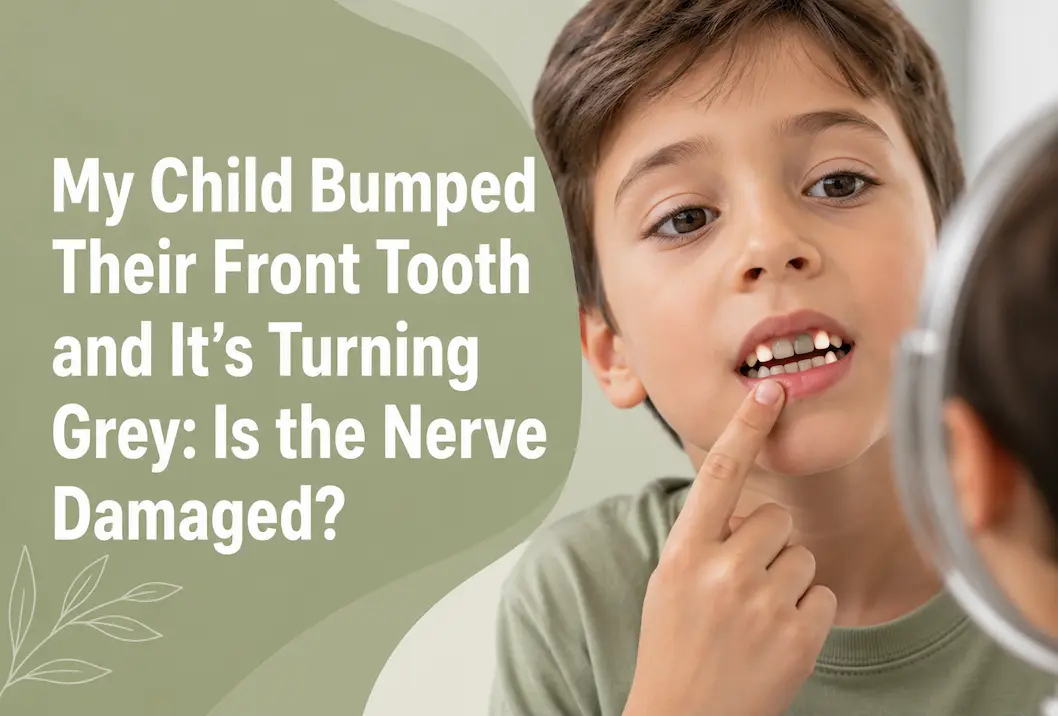
Seeing a child tooth turning grey after a fall can be alarming. The color may come from bruising inside the tooth, but it can also mean the nerve and blood supply were badly damaged.
Color alone cannot confirm that the nerve is dying. Arrange a dental check and watch for pain, swelling, looseness, drainage, or a small bump on the gum.
Child Tooth Turning Grey After Injury
A hard bump can break tiny blood vessels inside a front tooth. Blood pigments then stain the inner tooth layers, making it look grey, purple, brown, or darker than the matching tooth beside it. It is similar to a bruise trapped inside a hard shell.
The shade may appear days or weeks after the fall. A toddler may trip, seem fine, and show a grey front tooth later. The tooth may lighten, stay the same, or darken, so record the change.
Grey Color Appearing Later
A delayed color change does not necessarily mean another injury happened. Changes inside the tooth can take time to show through its surface.
Grey Tooth And Nerve Damage
Does a grey tooth mean the nerve is dying? Sometimes, but not always. A traumatized baby tooth nerve may be bruised and recover. A stronger injury can cut off enough blood flow that the nerve stops working.
Dentists also consider pain, tooth movement, gum changes, and follow-up findings. A grey tooth with no other symptoms may be watched, while a grey tooth with swelling or drainage needs faster care.
Signs The Tooth May Be Healing
Your child eats normally, the tooth stays steady, the gum looks healthy, and the shade begins to lighten. Continue monitoring because changes may still appear later.
Signs The Tooth May Not Be Healing
Child tooth nerve damage symptoms include worsening pain, swelling, drainage, increasing looseness, a bad taste, or a pimple-like gum bump. A dead baby tooth after trauma may remain painless, so follow-up still matters.
Grey Tooth Warning Signs
Contact a pediatric dentist promptly if your child has:
-
New or worsening pain
-
Swelling around the tooth, lip, or face
-
A white or red gum bump
-
Drainage or a bad taste
-
Fever with dental swelling
-
A moved or very loose tooth
-
Trouble biting, eating, or closing the teeth
-
Continued bleeding
-
Grey color alone may not be an emergency, but it should still be examined. For sudden injuries or warning signs, request emergency pediatric dental care.
Child Tooth Injury: What Now?
Call the dental office and explain when the fall happened, which tooth was hit, and when the color appeared. Take a clear photo for comparison.
Offer softer foods if biting hurts. Avoid hard foods and toys your child may bite with the injured tooth. Brush gently and keep the gumline clean.
Check the tooth and gum daily without pressing or wiggling them. Do not use whitening strips, peroxide, or home remedies. They cannot repair an injured nerve and may irritate your child’s mouth.
For a young child without a regular dentist, an infant or toddler dental visit is an appropriate place to assess the injury.
Pediatric Tooth Exam: What Happens?
The dentist will ask how the accident happened and check whether the tooth cracked, moved, loosened, or became tender. The gum and your child’s bite will also be examined.
An X-ray may be recommended to view the root, nearby bone, and adult tooth underneath. Follow-up may be needed because some changes develop slowly.
Review the American Academy of Pediatric Dentistry’s child dental injury guidance for further details.
Watching The Tooth
Monitoring may be enough when the tooth is stable, your child is comfortable, and there is no swelling, drainage, or gum bump.
Treating The Tooth
Treatment may be needed when the tooth is infected, badly damaged, very loose, or affecting eating. Depending on age and injury, pediatric root canal therapy may help keep a damaged baby tooth in place.
Grey Baby Tooth: Pull It?
A grey baby tooth does not need removal because of color alone. Some remain comfortable until they loosen naturally, helping with eating, speech, appearance, and spacing.
Removal may be recommended for pain, infection, dangerous looseness, repeated swelling, or concern about the adult tooth underneath. The child’s age and the tooth’s expected falling-out time also guide the decision.
Baby Tooth Or Adult Tooth?
A baby tooth can sometimes be watched when stable and free of infection. An injured adult tooth usually needs faster attention because it must last for life.
Parents may not know which type was hit. When unsure, call promptly and describe your child’s age and the tooth’s location.
Adult Tooth Underneath
A strong baby tooth injury can sometimes affect the developing adult tooth, especially when the baby tooth was pushed out of position. Grey color alone does not prove damage. An exam and follow-up help track the adult tooth as it grows.
Grey Tooth Care: Next Steps
A toddler who fell and developed a grey front tooth needs calm, practical care. The color may signal bruising or serious nerve damage, but it cannot give the full answer alone. Schedule an assessment, protect the tooth from another bump, and seek quicker care for pain, swelling, drainage, looseness, or a gum bump.
Why Choose Treehouse Pediatric Dentistry?
Treehouse Pediatric Dentistry provides child-focused care for dental injuries in a calm, welcoming setting. Our team evaluates grey front teeth, explains findings clearly, and creates age-appropriate care plans. Families receive practical guidance, careful follow-up, and support centered on each child’s comfort, safety, and growing smile.
Grey Tooth FAQs
Yes. A grey baby tooth may lighten if the injury caused temporary bruising inside it, while another may stay darker until it falls out. Because color cannot confirm healing, arrange an exam and attend any recommended follow-up.
Related Services

Dr. Sana Yousaf DDS
board certified pediatric dentist