
Sedation Dentistry for Kids: Is It Safe for Dental Treatment
Hearing that your child may need help relaxing during dental treatment raises immediate questions. Is it safe, and what should you expect?
Sedation dentistry for kids can help children who feel very afraid, struggle to sit safely, or need longer care. It is generally safe when the child is assessed carefully, the right option is chosen, and trained professionals monitor the visit.
What Is Sedation Dentistry for Kids?
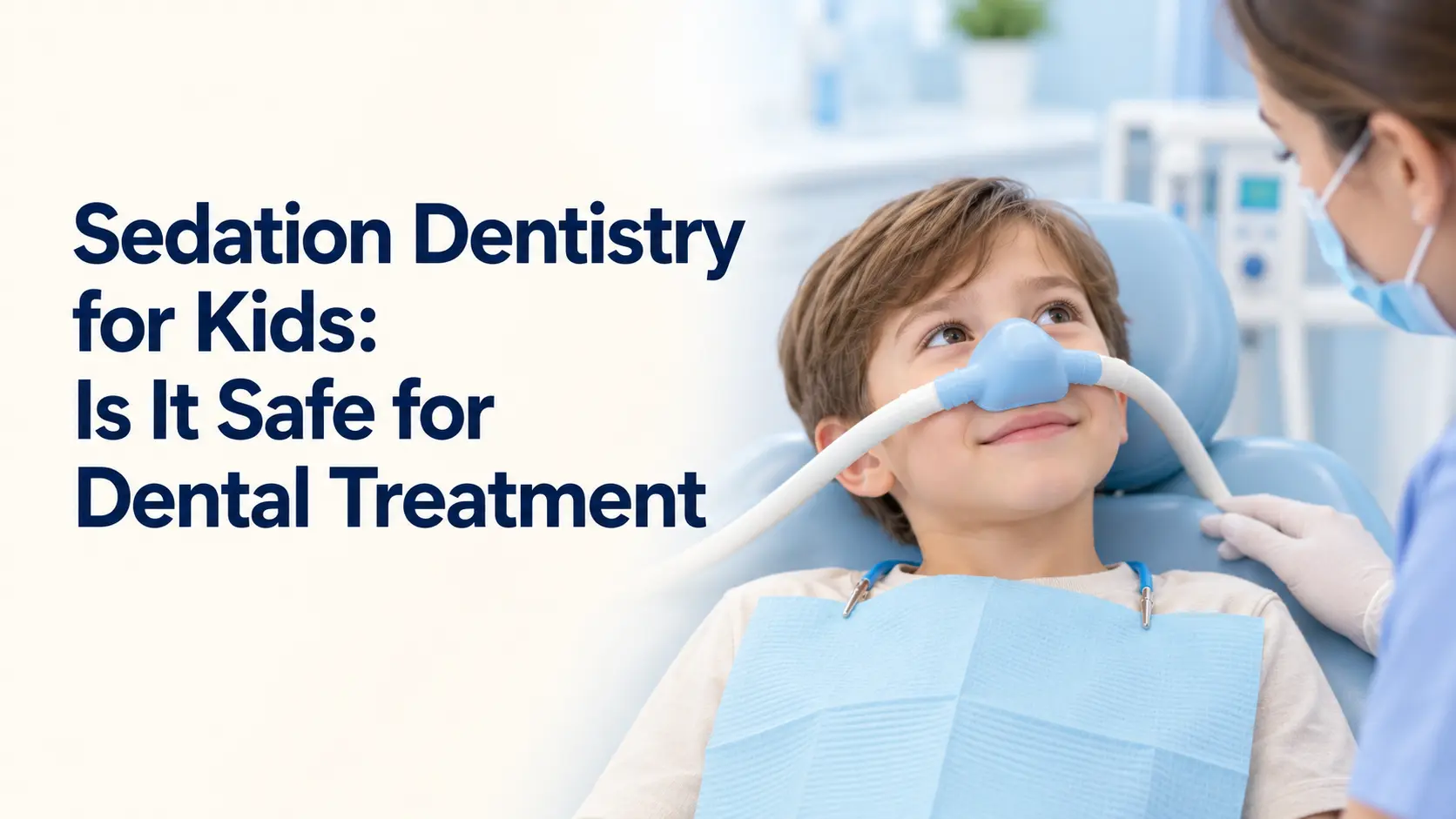
Sedation dentistry uses laughing gas or another calming medicine to reduce fear and movement during dental care. Depending on the option, a child may stay awake, become sleepy, or sleep through treatment.
Calming medicine manages fear and cooperation, while tooth numbing helps prevent pain. Parents can review available sedation dentistry options before discussing the best approach for their child.
Why Might a Child Need Help Staying Calm?
A dentist may consider sedation for strong fear, a sensitive gag reflex, difficulty sitting still, a long treatment, or extra sensory and communication needs.
A seven-year-old having one small filling may manage with reassurance and laughing gas. A three-year-old needing several treatments may need a different plan because the visit is longer. Children receiving special needs dental care need a plan shaped around comfort, communication, and health history.
Is Sedation Dentistry for Kids Safe?
Dental sedation safety for children depends on preparation, trained supervision, suitable equipment, and recovery checks.
The American Academy of Pediatric Dentistry recommends a health review, appropriate eating and drinking instructions, breathing checks, continuous observation, and safe recovery before discharge. Parents can review the AAPD child sedation safety guidance.
What Makes Dental Sedation Safer?
The team reviews health, medicines, allergies, past reactions, breathing, and treatment needs. During care, it watches breathing, oxygen level, and heart rate until the child can leave safely.
Dr. Sana can help parents compare the expected benefit with possible limits and side effects. The goal is to choose the lightest option that can support safe, effective treatment.
What Should Parents Tell the Dentist?
Tell the dentist about fever, cough, a cold, blocked nose, loud snoring, sleep-related breathing concerns, allergies, daily medicines, supplements, and past reactions. Call the office if the child becomes sick before the appointment.
A blocked nose matters because laughing gas is breathed through a nose mask. If the child cannot breathe comfortably through the nose, the plan may need to change.
Which Sedation Option May Be Recommended?
The right option depends on the child’s age, fear level, health, cooperation, and amount of dental work.
Laughing Gas for Mild Dental Fear
Laughing gas is often used for mild worry and shorter treatment. The child stays awake and breathes through a nose mask. The effect usually fades within minutes.
Questions about laughing gas safety for kids are common, but safe use still depends on correct use, monitoring, and sharing breathing or health concerns.
Calming Medicine for Longer Care
Medicine taken by mouth can make a child sleepy. Its effects last longer than laughing gas, so close adult supervision and careful aftercare are important.
Parents must follow every instruction about eating, drinking, travel, and physical activity. Do not give calming medicine at home unless the dental team has provided clear directions and direct supervision.
Full Sleep Care for Complex Treatment
Full sleep care may be considered for severe fear, unsafe movement, or extensive treatment. Ask who provides and monitors this care and what recovery involves.
Treehouse Pediatric Dentistry works with a separate trained professional to monitor children when deeper support is recommended, allowing the dentist to focus on treatment.
What Happens Before, During, and After Sedation?
Before the Dental Visit
Follow eating and drinking directions exactly. Ask whether regular medicines should be taken. Report any cough, fever, congestion, or health change.
Dr. Sana can guide parents on preparation based on the planned option. If your child accidentally eats or drinks outside the instructions, contact the office instead of hiding the mistake. The appointment may need to be adjusted for safety.
During Dental Treatment
The team monitors the child according to the planned level of support. Your child may still need numbing medicine for a filling, crown, or other treatment.
Before giving permission, understand whether your child will be awake, sleepy, or fully asleep. Ask who will watch your child while the dentist works and what equipment will be used.
After the Dental Visit
Keep the child supervised and follow written post-treatment instructions. Begin food and drinks as directed. Avoid climbing, sports, biking, and active play until the child is fully alert.
Treehouse also provides specific laughing gas aftercare guidance. Call the office for breathing trouble, repeated vomiting, unusual difficulty waking, or symptoms that worsen instead of improving.
When Might Sedation Not Be the First Choice?
Not every worried child needs sedation. A shorter visit, simple explanations, videos, music, breaks, or treatment divided across appointments may be enough.
Early preventive dental care can also lower the chance of needing longer treatment later. Ask whether a lighter approach could work without making care unsafe or incomplete.
Which Questions Should Parents Ask?
Ask why sedation is recommended, whether a lighter option could work, who will provide and monitor it, and what safety equipment is available.
Also ask about eating rules, expected recovery, possible side effects, and whom to call afterward. Clear answers help parents give informed consent without pressure or fear.
Finding a Pediatric Dentist in Chantilly, VA
Families seeking a pediatric dentist in Chantilly, VA should look for child-specific planning, written instructions, and clear monitoring details.
When parents search for a dentist near me in Chantilly, they should confirm that the practice explains every option and who will supervise the child. A good visit should help both the child and parent feel informed.
Why Choose Treehouse Pediatric Dentistry?
Sedation dentistry for kids can be useful and generally safe when carefully planned. Parents should share complete health information, follow preparation rules, understand the planned level of support, and ask how their child will be monitored.
The best choice is not always the strongest option. It is the lightest approach that allows your child to receive safe and complete dental treatment.
Final Thoughts
Treehouse Pediatric Dentistry provides child-focused care in a calm setting for families in Chantilly. Dr. Sana helps parents understand why sedation may be considered, what each option involves, and how to prepare their child. The team plans visits around comfort, safety, treatment needs, and clear communication from start to finish.
Frequently Asked Questions
Laughing gas is commonly used for mild dental fear. Children stay awake, and the effect usually fades quickly. Safety depends on health screening, correct use, monitoring, and the child being able to breathe comfortably through the nose.
Related Services
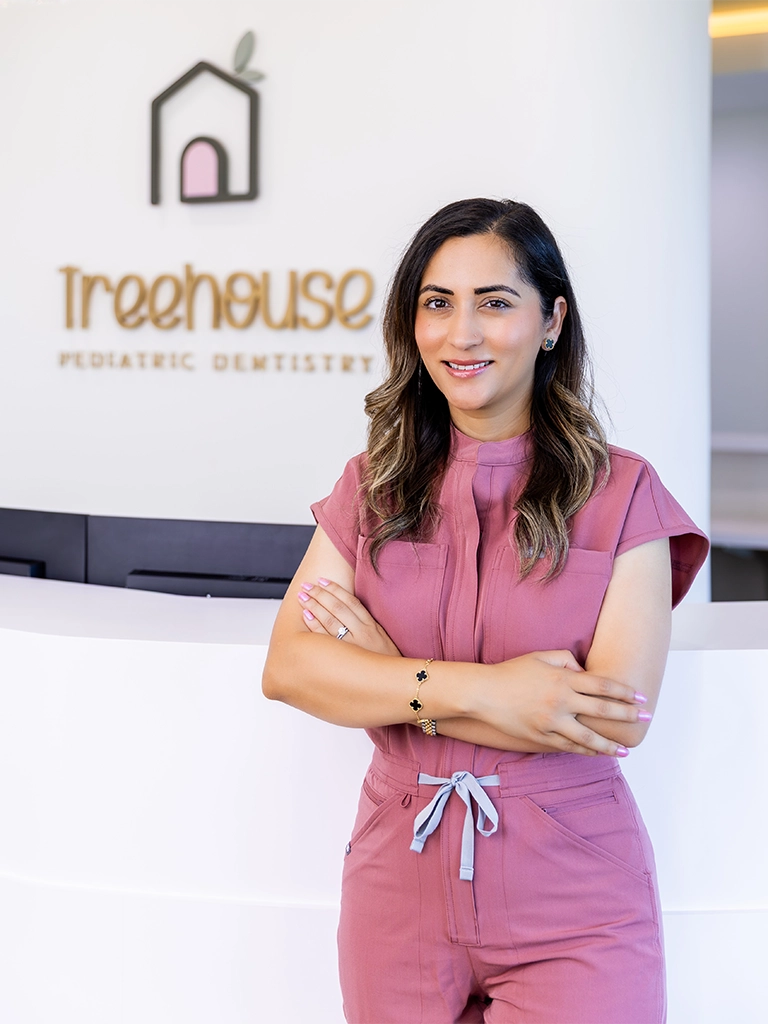
Dr. Sana Yousaf DDS
board certified pediatric dentist