
Baby Molar Extraction Space Maintainer: Why It May Be Needed
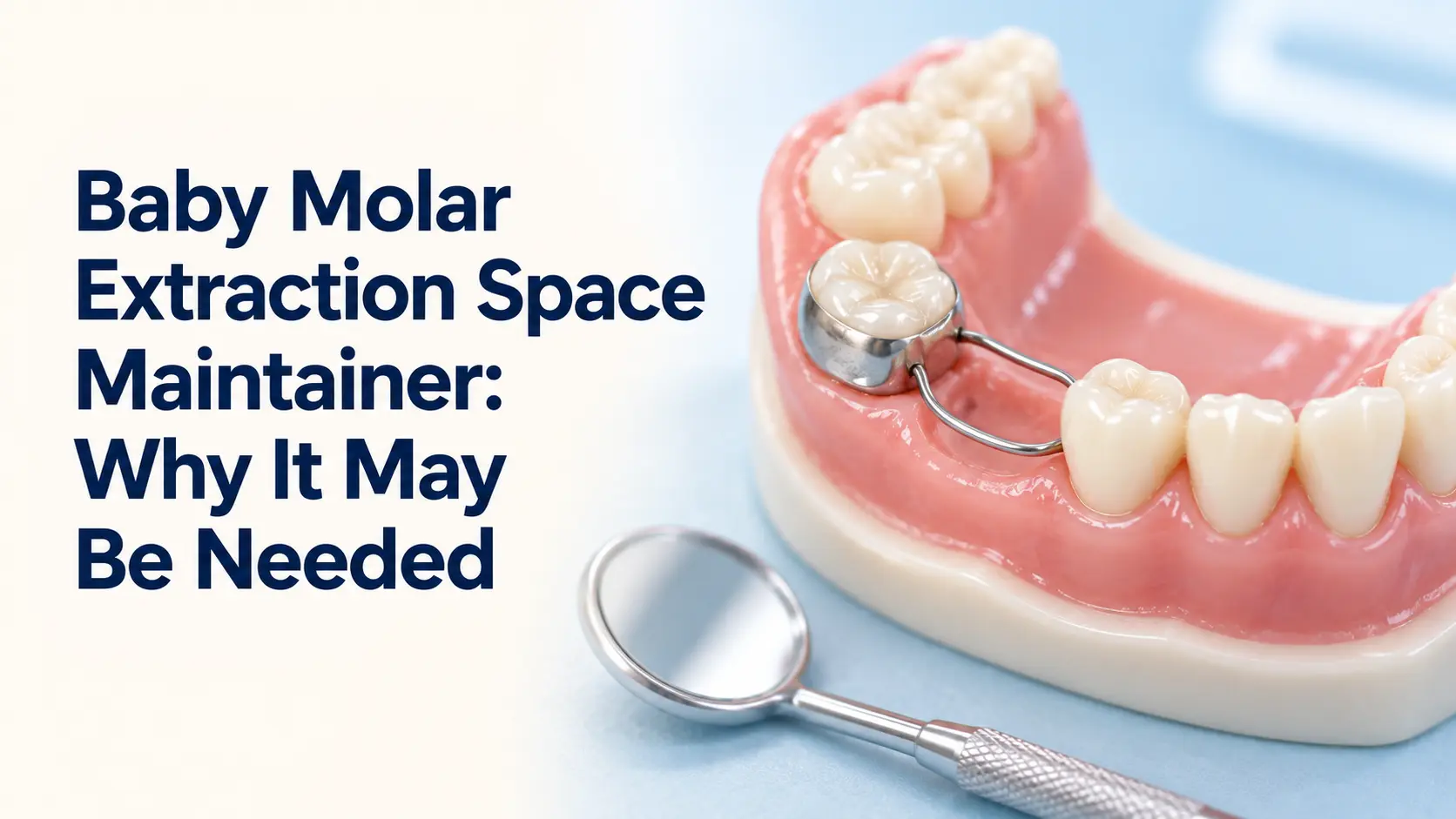
When a back baby tooth is removed early, the empty gap may look harmless. However, nearby teeth can move into it before the adult tooth is ready. A baby molar extraction space maintainer may be recommended to protect that room.
Not every child needs one. The choice depends on the tooth removed, your child’s age, the adult tooth’s position, and whether shifting has started. Dr. Sana can check these details and explain whether the gap needs support or careful monitoring.
Why Do Back Teeth Need Space Maintainers?
Back baby teeth help children chew, but they also save room for adult teeth. Some must stay in place for years, so early loss can leave an unprotected opening.
Think of teeth like books on a shelf. Remove one, and the others may lean into the space. A space maintainer for children acts as a temporary placeholder. It does not straighten teeth. It keeps the existing room from becoming smaller.
The American Dental Association explains that early baby tooth loss can leave too little room when adult teeth are ready to come in.
What Happens If a Baby Tooth Falls Out Early?
What happens if a baby tooth falls out early depends partly on its location. A missing front tooth may cause fewer spacing concerns, while early loss of a back tooth can change how nearby teeth line up.
The gap may narrow in this order:
- The baby molar leaves an opening.
- A nearby tooth leans or moves forward.
- The available room becomes smaller.
- The adult tooth has less space to enter.
- Crowding may become more likely.
How Neighboring Teeth Shift Into the Gap
Suppose a six-year-old loses a back baby tooth that should have remained for several more years. The large tooth behind the gap may move forward while a tooth in front tilts backward. When neighboring teeth shift into the gap, they can block part of the adult tooth’s path.
Movement may begin before parents can see it, making follow-up visits important.
Baby Molar Extraction Space Maintainer: Is It Always Needed?
No. A baby molar extraction space maintainer is not automatic after every removal. The dentist should assess the full situation.
When Holding the Space May Help
It may be more useful when:
- The adult replacement is still years away.
- The mouth already has limited room.
- Nearby teeth have started moving.
- More than one baby tooth is missing.
- A back adult tooth could move forward.
When Monitoring May Be Enough
Monitoring may be reasonable when:
- The adult tooth is expected soon.
- Natural spacing is generous.
- Little movement is expected.
- Regular visits can track the gap.
The dentist can compare the tooth position with your child’s growth and help avoid treatment that is not needed.
Which Back Baby Tooth Was Removed?
Children have two baby molars on each side. Losing the backmost one early can matter more because the large adult tooth behind it may move forward. Losing the other molar can also reduce room, but the risk may differ.
The dentist checks which tooth was lost, whether the large adult molar is in place, how much room remains, and how close the replacement tooth is. This also explains the connection between premature baby tooth loss and orthodontics. Early loss can increase crowding risk, but it does not mean every child will need braces.
What the Space Maintainer Visit Looks Like
The dentist examines the gap and may take a dental image to see the adult tooth and remaining room. A fitted space maintainer is then prepared.
Many designs attach to nearby teeth. Removable options may suit selected older children who can follow instructions. The device should not push teeth apart. It simply holds the current opening.
Review the clinic’s baby tooth extraction instructions before follow-up. Dr. Sana can show your child what to expect and explain each step in simple language.
Space Maintainer Care That Keeps It Secure
Most children adjust after a short settling-in period. To protect the device:
- Brush carefully around its wire and supporting tooth.
- Avoid gum, sticky candy, and very hard foods.
- Do not pull or push it with fingers or the tongue.
- Keep regular checkups.
- Call if it feels loose, bent, sharp, or painful.
Use the clinic’s space maintainer care instructions after placement. Never adjust a loose device at home. Seek emergency pediatric dental care if it causes significant pain or cuts the mouth.
Closing Baby Molar Gaps Need Early Checks
A space maintainer protects a room that still exists. It usually cannot reopen a gap after neighboring teeth have moved into it.
If the opening has narrowed, the dentist will check the remaining room and adult tooth position. The next step may be monitoring or a different plan. Asking soon after removal provides more choices than waiting until the adult tooth appears.
Baby Molar Gaps Need Early Protection
A removed baby molar does not always cause crowding, and a space maintainer is not always needed. The best step is to check which tooth was lost, how long the space must stay open, and whether movement has begun.
Keep follow-up appointments and ask what changes to watch for. Preventive pediatric dental care can track developing adult teeth and identify spacing concerns early.
Why Choose Treehouse Pediatric Dentistry?
Treehouse Pediatric Dentistry helps families understand what follows early baby molar loss. Dr. Sana checks the remaining space, developing adult tooth, and nearby teeth before guiding parents. Children receive clear explanations, thoughtful follow-up, and practical home-care support shaped around their comfort, growth, and individual dental needs during each scheduled visit.
Baby Molar Space Maintainer FAQs
No. The choice depends on which molar was removed, your child’s age, available room, nearby tooth movement, and how soon the adult tooth may arrive. A dentist should examine the gap before recommending one.
Related Services

Dr. Sana Yousaf DDS
board certified pediatric dentist